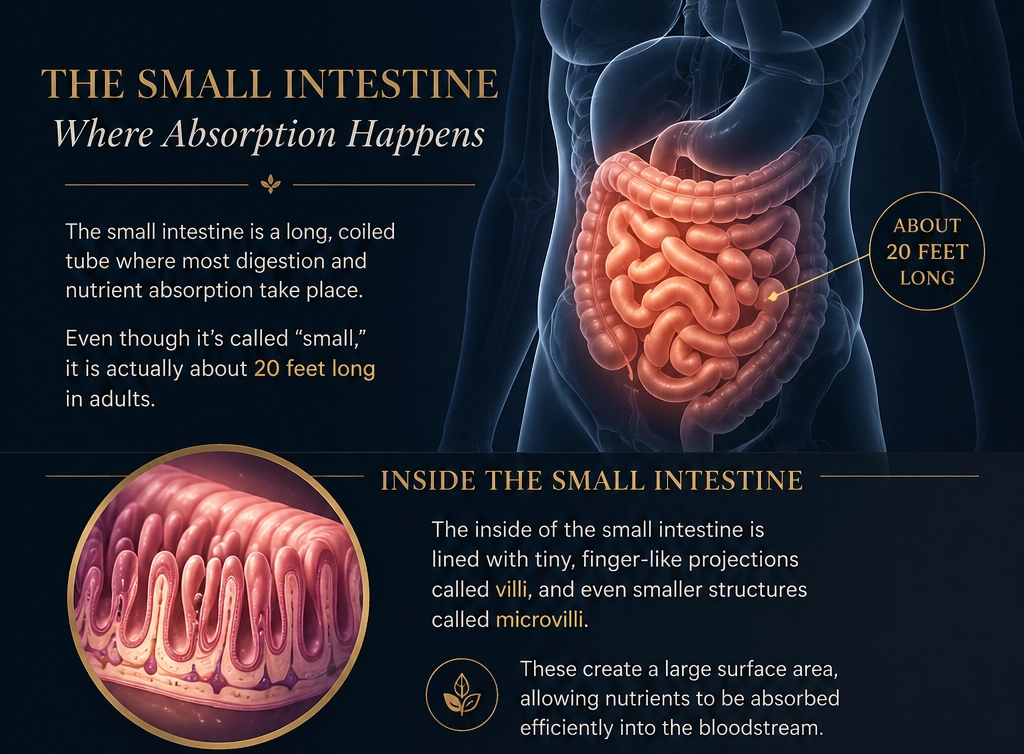
This phase of digestion represents the final stage within the Foundations of Digestive Living — elimination. Following appropriation (how we take in food) and assimilation (how the body processes and absorbs nutrients), elimination completes the cycle by allowing the body to release what it no longer needs. When this rhythm is supported, the process tends to unfold with more ease and consistency. When it is disrupted, the body may begin to signal that elimination is not moving as comfortably or efficiently as it could — often reflecting how well the earlier stages of digestion have been supported.
What Happens in This Phase
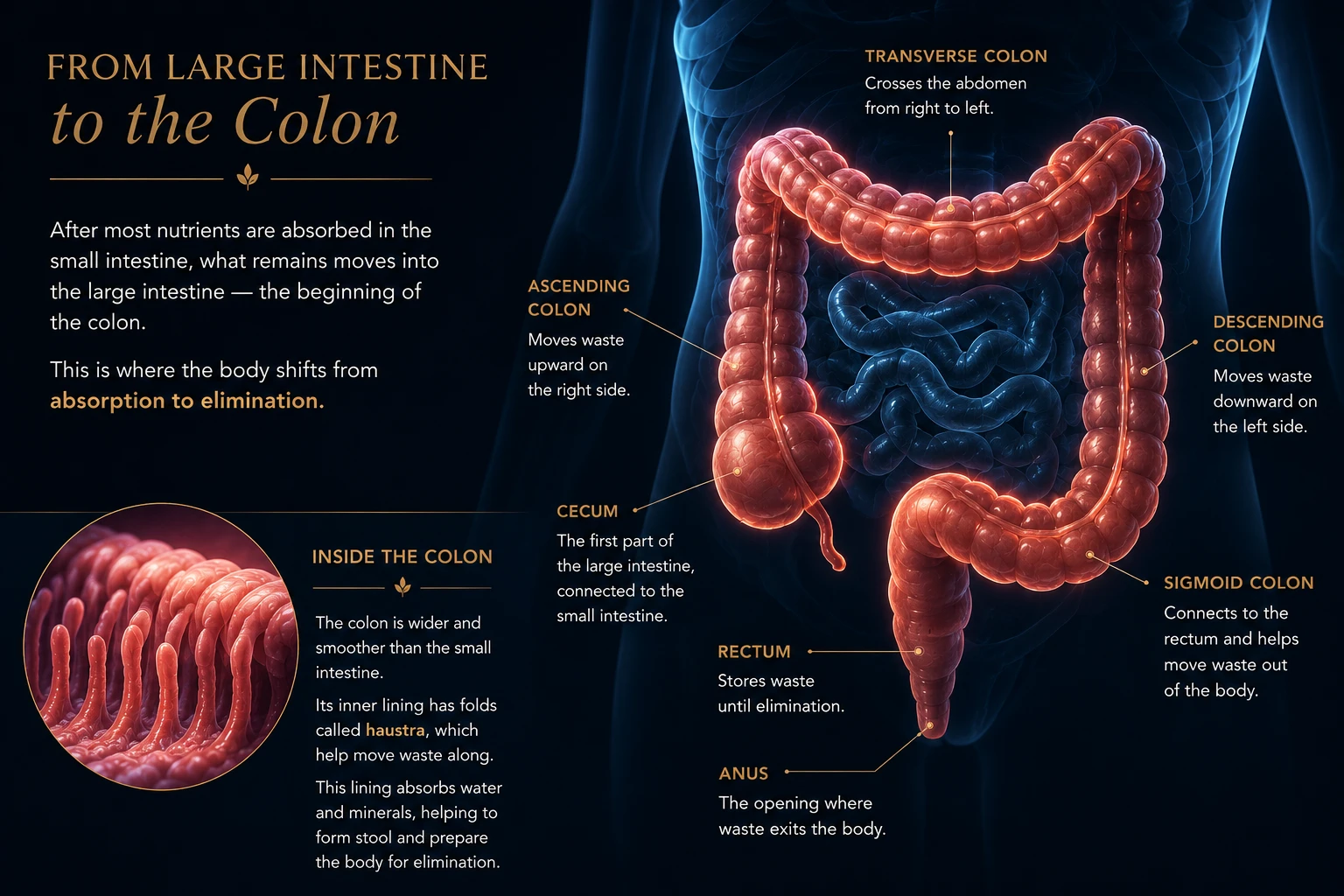
As digestion moves into the colon, the body enters the final stage of the digestive process.
Remaining water is gradually absorbed, helping to shape the consistency of what remains, while undigested material is compacted into stool and guided toward elimination through coordinated movement. This phase unfolds more slowly and deliberately — not simply because of the length of the colon (5 feet), but because of what is taking place within it. Water absorption requires time and steady contact with the intestinal wall, allowing the body to gradually adjust consistency as waste moves through.
When this process moves too quickly, stool may remain loose. When it moves too slowly, it can become overly dry — reflecting the importance of balance within this phase.
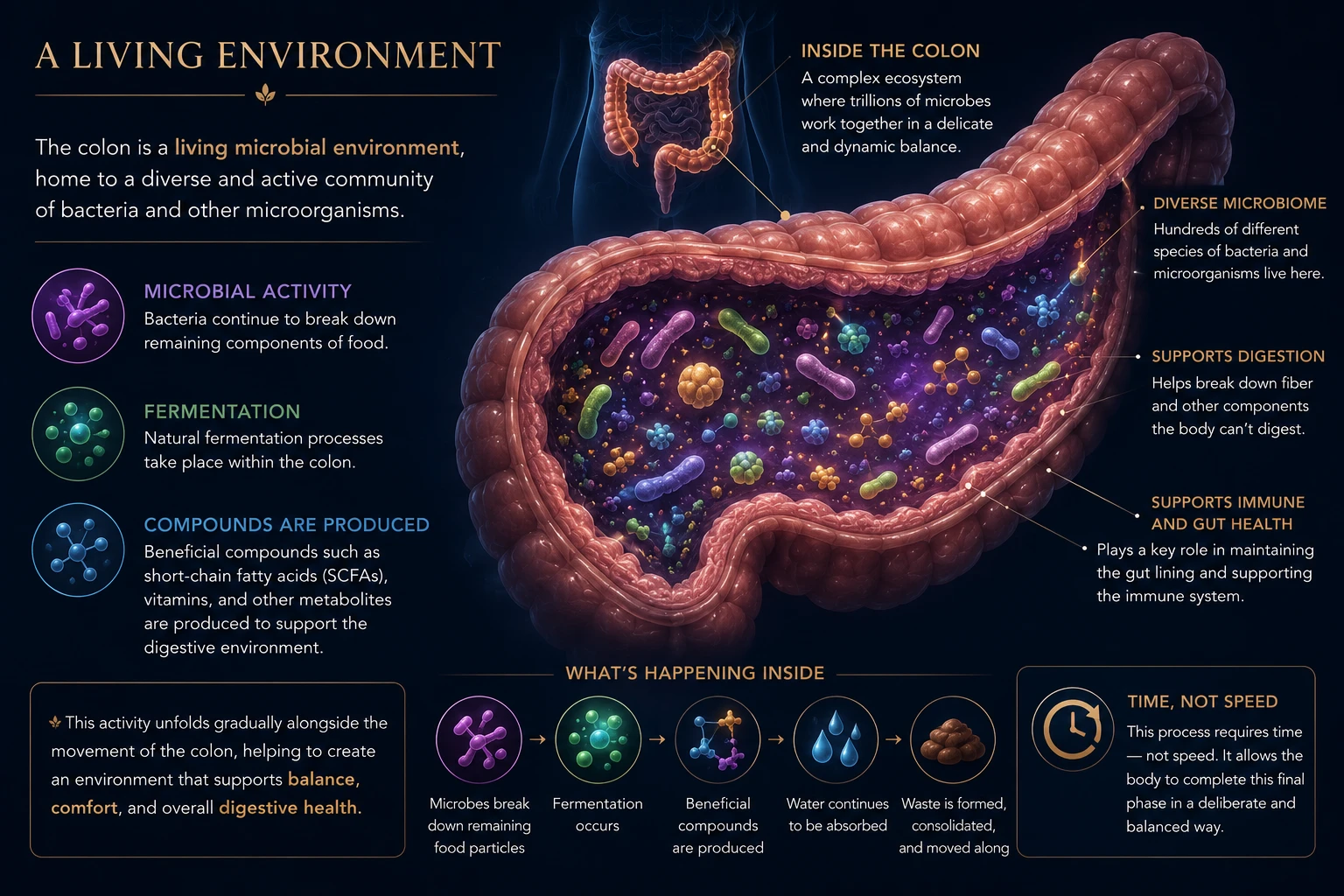
This visual offers a glimpse into the inner environment of the colon, where structure and activity come together in a dynamic and coordinated way. Within this space, movement, transformation, and interaction occur simultaneously, reflecting a phase of digestion that is both active and deliberate. Rather than a simple passageway, the colon functions as a complex internal landscape — one that supports the body in completing the digestive process and maintaining overall balance.
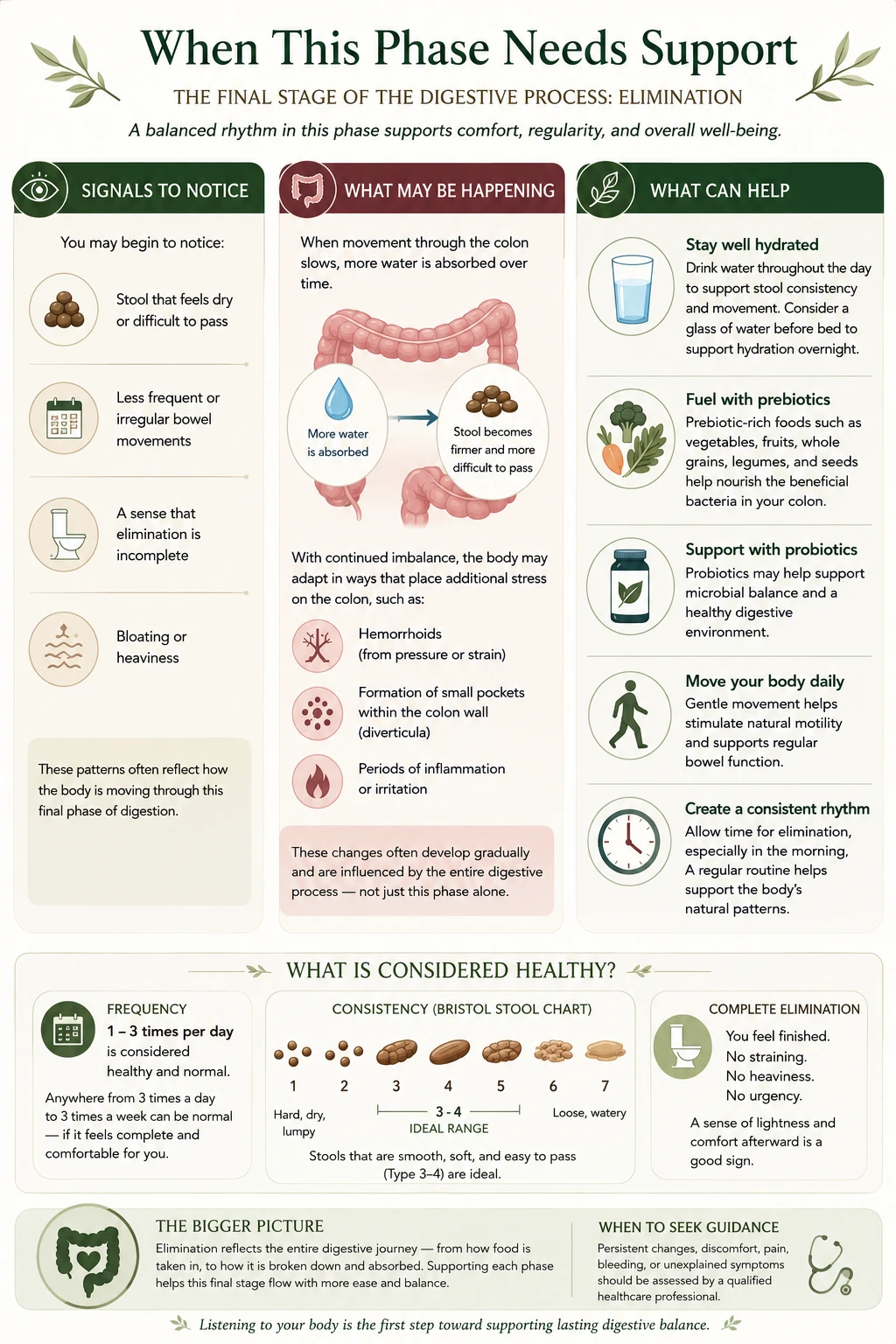
Healthy elimination is not defined by one exact pattern, but there are common signs that this phase is functioning more comfortably and efficiently. Stools that are formed, easy to pass, and not excessively odorous often reflect a more balanced digestive environment, while persistent changes in consistency, odor, or comfort may signal that the digestive process needs additional support.
Try This
Over the next few days, begin paying attention to your body’s natural rhythm.
Notice:
- How often you eliminate
- Whether elimination feels complete and comfortable
- How your body responds to hydration, meal timing, movement, and stress
Sometimes the body gives subtle signals long before stronger symptoms appear. Learning to notice these patterns can be an important first step toward supporting balance within the digestive process.
Final Notes
Elimination is more than the final step of digestion — it reflects the cumulative effects of how food was taken in, processed, absorbed, and ultimately released.
Within the Foundations of Digestive Living, this phase represents the body’s ability to complete the digestive cycle and maintain internal balance. When elimination is supported, it can influence comfort, energy, regularity, and overall well-being.
Stress can also play an important role in this phase. When the body remains in a prolonged state of tension or stress, digestion may slow and the natural rhythm of elimination can become disrupted. Rather than feeling open and relaxed, the digestive system may respond by tightening and holding — influencing movement throughout the digestive tract.
Supporting digestion is often less about forcing the body and more about creating conditions that allow the body to shift into a more balanced and receptive state through nourishment, hydration, movement, rhythm, and awareness.
In some cases, thoughtfully selected digestive support supplements may also help complement these foundational practices as part of a broader wellness approach.
In the next newsletter, we’ll explore how stress influences digestion, how the body responds to chronic stress, and why the nervous system plays such a central role in digestive health and overall well-being.
A Support I Personally Use
Alongside foundational habits such as hydration, meal rhythm, nourishment, and nervous system support, I also personally use targeted digestive support as part of my wellness approach.
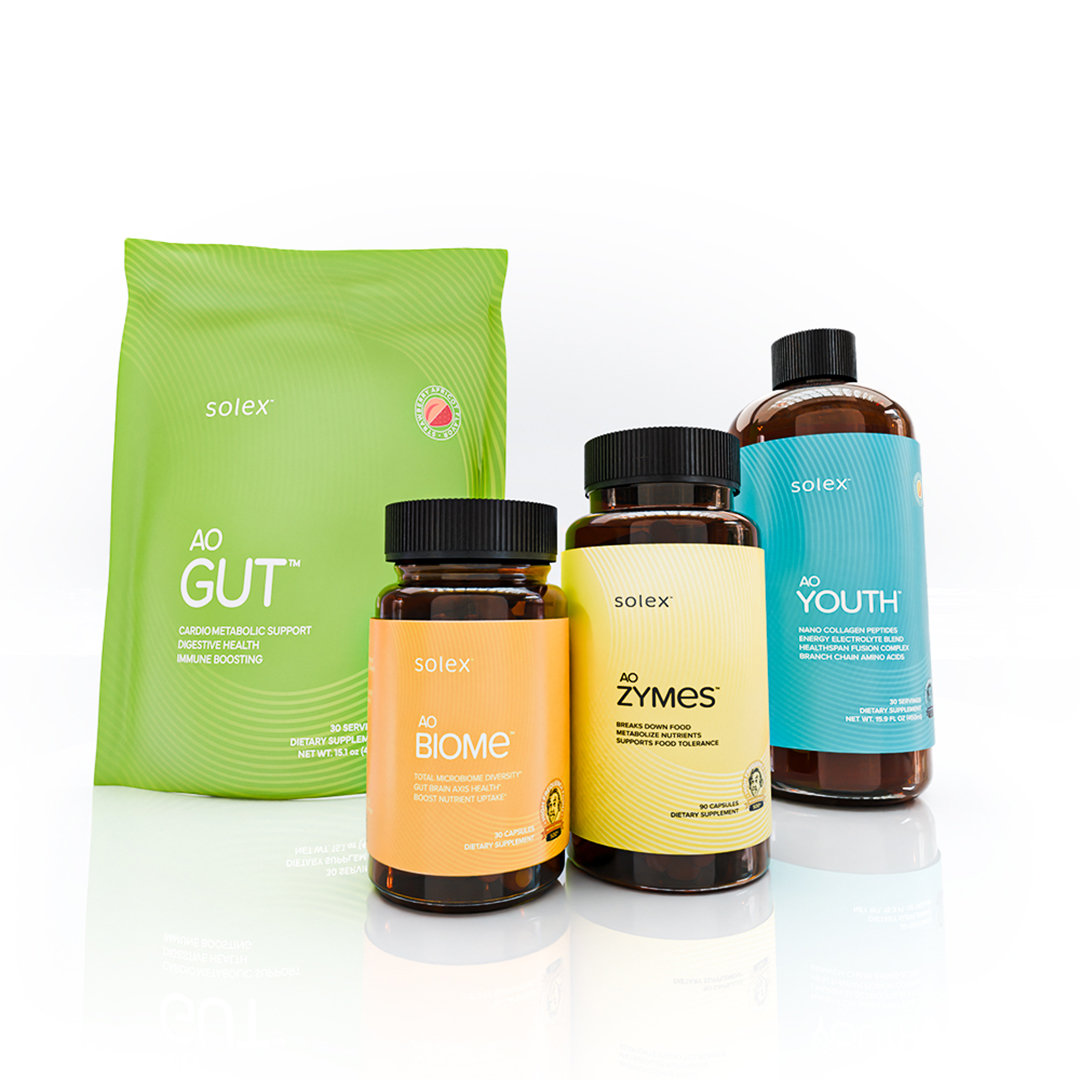
Products such as GUT, Enzymes, and Biome by Solex are ones I continue to value for their whole-food based, high-frequency formulations and thoughtfully selected ingredients that support digestion, microbial balance, and the intestinal environment.
For me, these products align with the broader philosophy that digestion is not one isolated event, but a connected process involving appropriation, assimilation, and elimination.
Supportive tools are never a replacement for foundational habits, but when used intentionally, they may help complement the body’s natural digestive rhythm.
Click Here for Solex Products