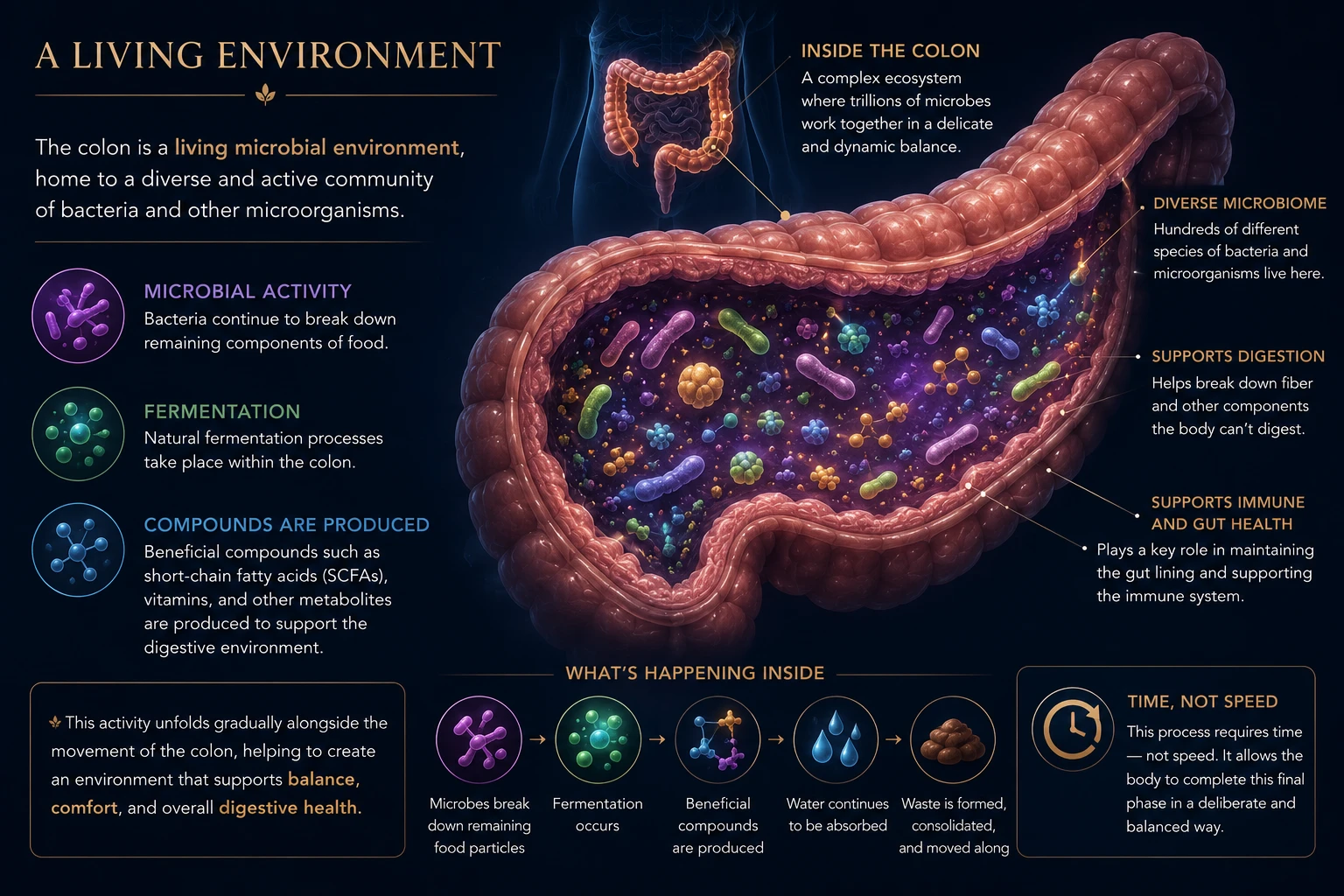
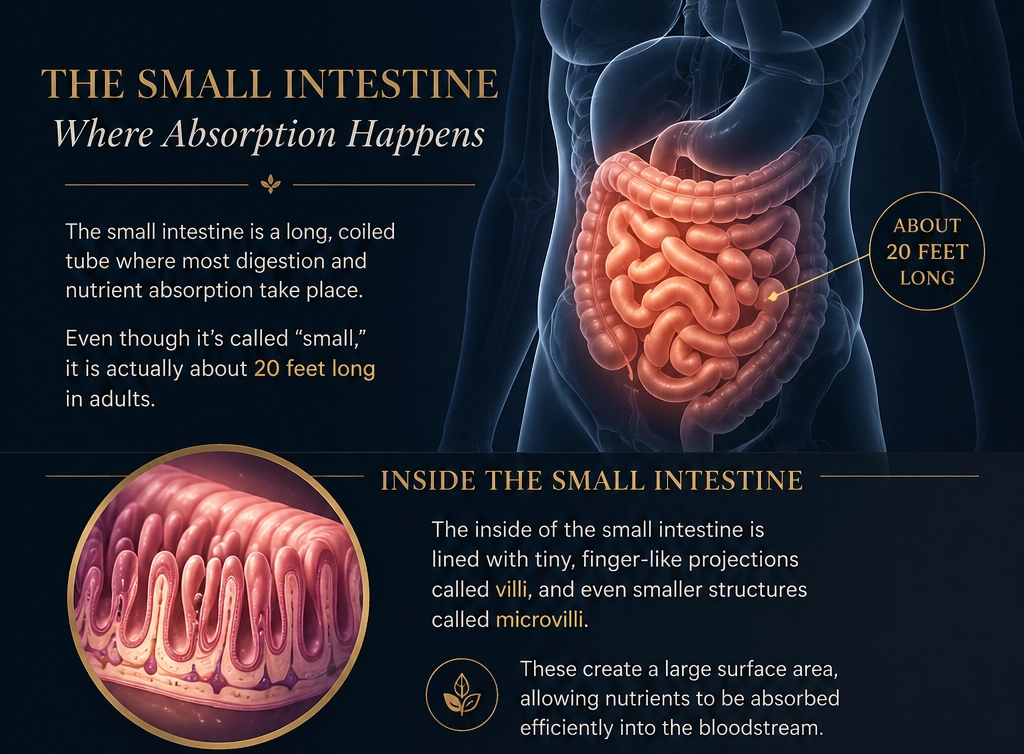
The connection between the gut and the brain begins far earlier than most people realize — before birth.
Around day 18 of embryonic development, the nervous system begins forming with the development of the neural tube. Within just a few weeks, this structure becomes the foundation of the brain and nervous system. By approximately day 28, the neural tube has closed, laying the groundwork for one of the most complex systems in the human body.
At nearly the same time, the digestive system also begins to develop, around weeks three to four of pregnancy. From these earliest stages, the gut and nervous system are forming side by side, beginning a relationship that continues throughout life.
This early partnership helps explain why gut health and brain health are deeply connected.
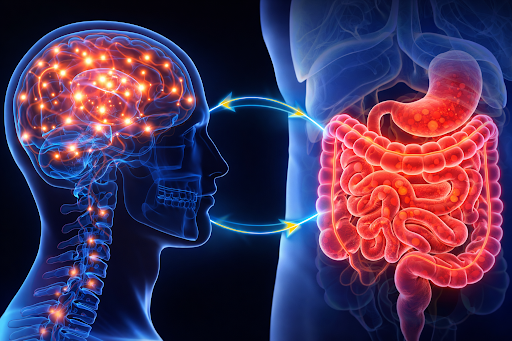
Scientists refer to this ongoing communication as the gut–brain axis — a two-way system linking the digestive tract and the nervous system through nerves, hormones, immune signals, and the trillions of microbes living in the gut. The brain sends signals that affect digestion, while the gut sends messages that can influence mood, stress response, and mental clarity.
The microbes in our intestines help produce compounds involved in emotional balance, inflammation, and overall well-being. When this internal environment is supported, communication between the gut and brain tends to be more balanced. When disrupted, that communication may feel strained — something researchers continue to explore.
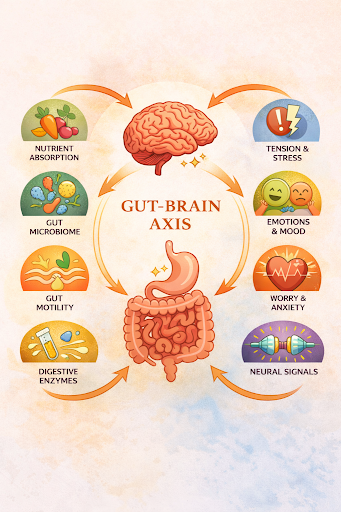
This connection helps explain why stress can affect digestion, and why digestive discomfort can influence how we feel mentally and emotionally. The body is not made of separate systems — it functions as an integrated whole.

Modern diets, environmental exposures, and daily stressors can place extra demands on digestion and the body’s natural balance. Highly processed foods limited dietary variety, and ongoing stress may make it more challenging for the gut to function comfortably, sometimes showing up as digestive discomfort, irregularity, or a general sense of imbalance over time. In these situations, thoughtfully chosen supports—such as digestive enzymes or microbiome-supporting supplements—may offer gentle assistance when used alongside mindful eating and lifestyle practices.
For those navigating digestive concerns or looking to better understand how oxidative stress and environmental factors may be affecting their well-being, I offer one-on-one consultations as a supportive starting point. Together, we can explore practical food choices, lifestyle adjustments, and simple ways to reduce everyday exposures, while considering individualized approaches that support balance without overwhelm or quick fixes.
Health is built over time. From early development through adulthood, nourishment, awareness, and intention matter.
Modern diets, environmental exposures, and daily stressors can place extra demands on digestion and the body’s natural balance. Highly processed foods limited dietary variety, and ongoing stress may make it more challenging for the gut to function comfortably, sometimes showing up as digestive discomfort, irregularity, or a general sense of imbalance over time. In these situations, thoughtfully chosen supports—such as digestive enzymes or microbiome-supporting supplements—may offer gentle assistance when used alongside mindful eating and lifestyle practices.
For those navigating digestive concerns or looking to better understand how oxidative stress and environmental factors may be affecting their well-being, I offer one-on-one consultations as a supportive starting point. Together, we can explore practical food choices, lifestyle adjustments, and simple ways to reduce everyday exposures, while considering individualized approaches that support balance without overwhelm or quick fixes.
Health is built over time. From early development through adulthood, nourishment, awareness, and intention matter.
Suggestions
Simple, Everyday Ways to Support the Gut–Brain Connection
Supporting the gut–brain connection doesn’t require perfection or drastic changes. Small, consistent habits can gently support balance over time.
Spend time grounded in nature
Walking barefoot on grass, soil, or sand — or simply spending quiet time outdoors — can help calm the nervous system and encourage a sense of balance. Even a few minutes a day can be beneficial.
Include fermented foods when tolerated
Foods such as yogurt, kefir, sauerkraut, kimchi, or fermented vegetables introduce naturally occurring microbes that can help support microbial diversity in the gut. Start slowly and notice how your body responds.
Get natural sunlight daily
Sunlight helps regulate circadian rhythms, which influence digestion, mood, and sleep. A short walk outside or sitting near natural light earlier in the day can support this natural rhythm.
Eat with awareness
Slowing down during meals, chewing thoroughly, and minimizing distractions allows the digestive system to function more efficiently and supports the gut–brain communication loop.
Support digestion gently
Warm meals, herbs, and simple cooking methods can be easier on digestion than heavily processed or rushed foods.
These practices are meant to support, not replace, nourishing food choices and a balanced lifestyle. The goal is consistency, not intensity.
Try This
Choose one or two of these simple practices and notice how your body responds:
Pause before meals
Take a few deep breaths before eating. Slowing down signals the nervous system that it’s safe to digest.
Sip, don’t gulp
Drink most of your water between meals, and take small sips during meals if needed. Favor room-temperature water.
Add one fermented food
If tolerated, include a small portion of fermented foods such as yogurt, kefir, sauerkraut, or fermented vegetables.
Get a few minutes of sunlight
Spend time outdoors each day, especially earlier in the day, to support natural rhythms tied to digestion and mood.
Ground when you can
Walk barefoot on grass, soil, or sand, or simply spend quiet time in nature to help calm the nervous system.
Remember, the goal isn’t perfection — it’s awareness. Small, consistent habits often create the most meaningful shifts.