Appropriation — Where Digestion Begins
Digestion begins long before food reaches the stomach. From the moment we take a bite, the body begins a coordinated process involving the mouth, salivary glands, and esophagus — each playing an essential role in preparing food for the next stage.
This early phase of digestion sets the tone for everything that follows. When it functions smoothly, the rest of the digestive process is better supported.
Let’s explore where digestion truly begins.
Mouth & Salivary Glands — The First Step
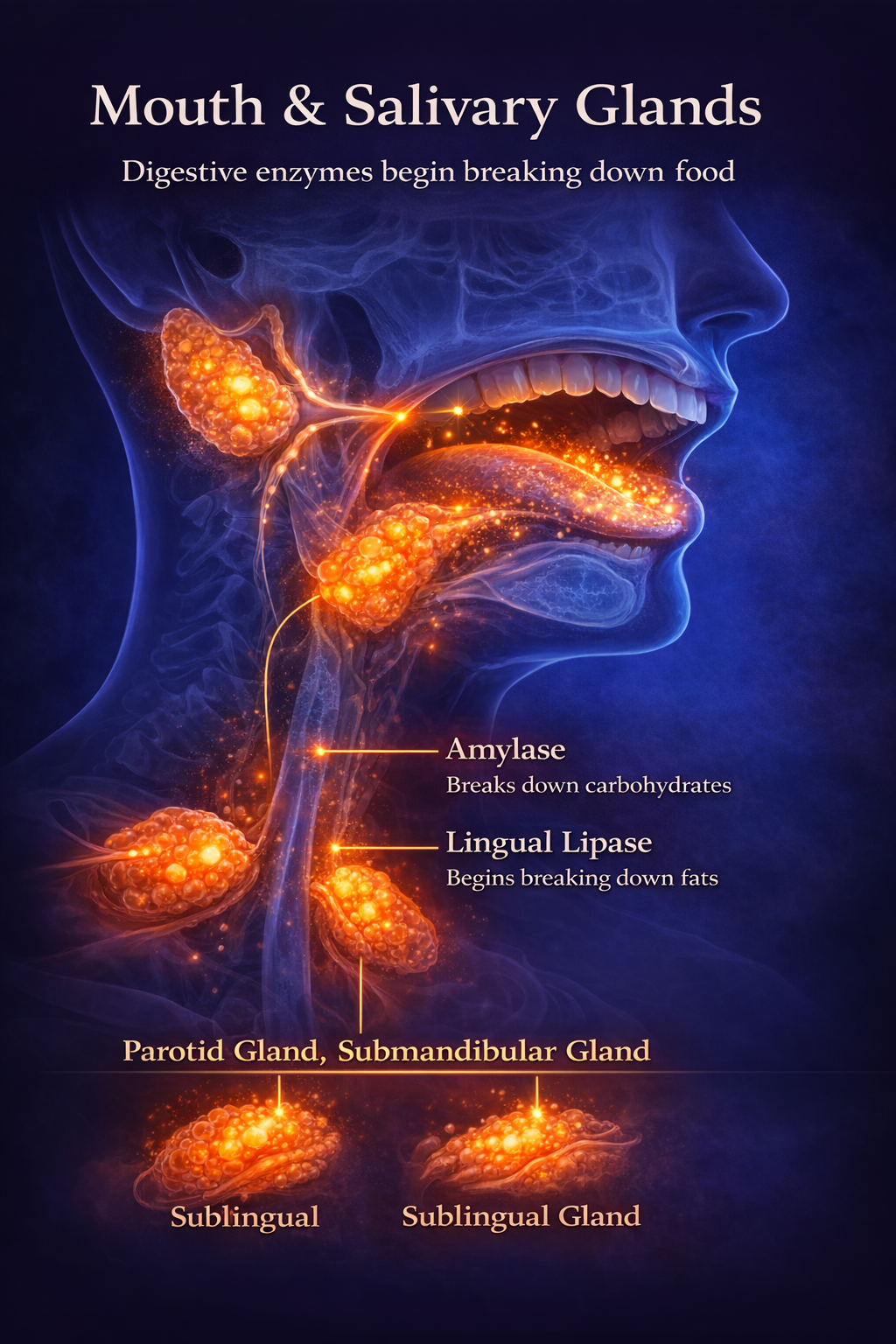
Digestion begins in the mouth.
Digestion begins in the mouth through both mechanical and chemical processes. Chewing breaks food into smaller pieces, increasing surface area and making it easier for the body to process.
At the same time, the salivary glands release saliva, which contains digestive enzymes — primarily amylase — beginning the breakdown of carbohydrates. Saliva also contains compounds that help lubricate food, support oral health, and prepare it for swallowing.
As food is chewed and mixed with saliva, it forms a soft mass that can move safely through the digestive tract. This early stage also signals the stomach and other digestive organs to prepare for the next phase.
When we slow down and chew thoroughly, we support this first and essential step in the digestive rhythm.
Esophagus — The Coordinated Pathway
Rhythmic movement guided by the nervous system
Once food has been chewed and mixed with saliva, it is formed into a soft mass called a bolus and swallowed.
From here, it enters the esophagus, a muscular tube that connects the mouth to the stomach. Rather than simply falling downward, food is guided through a coordinated, wave-like motion known as peristalsis. These rhythmic contractions move food steadily toward the stomach, regardless of body position.
This process is closely connected to the nervous system, which helps regulate timing and coordination. When we eat in a calm, relaxed state, this movement tends to be smoother and more efficient.
At the base of the esophagus, a small muscular valve — the lower esophageal sphincter — opens to allow food into the stomach and then closes to help prevent contents from moving back upward.
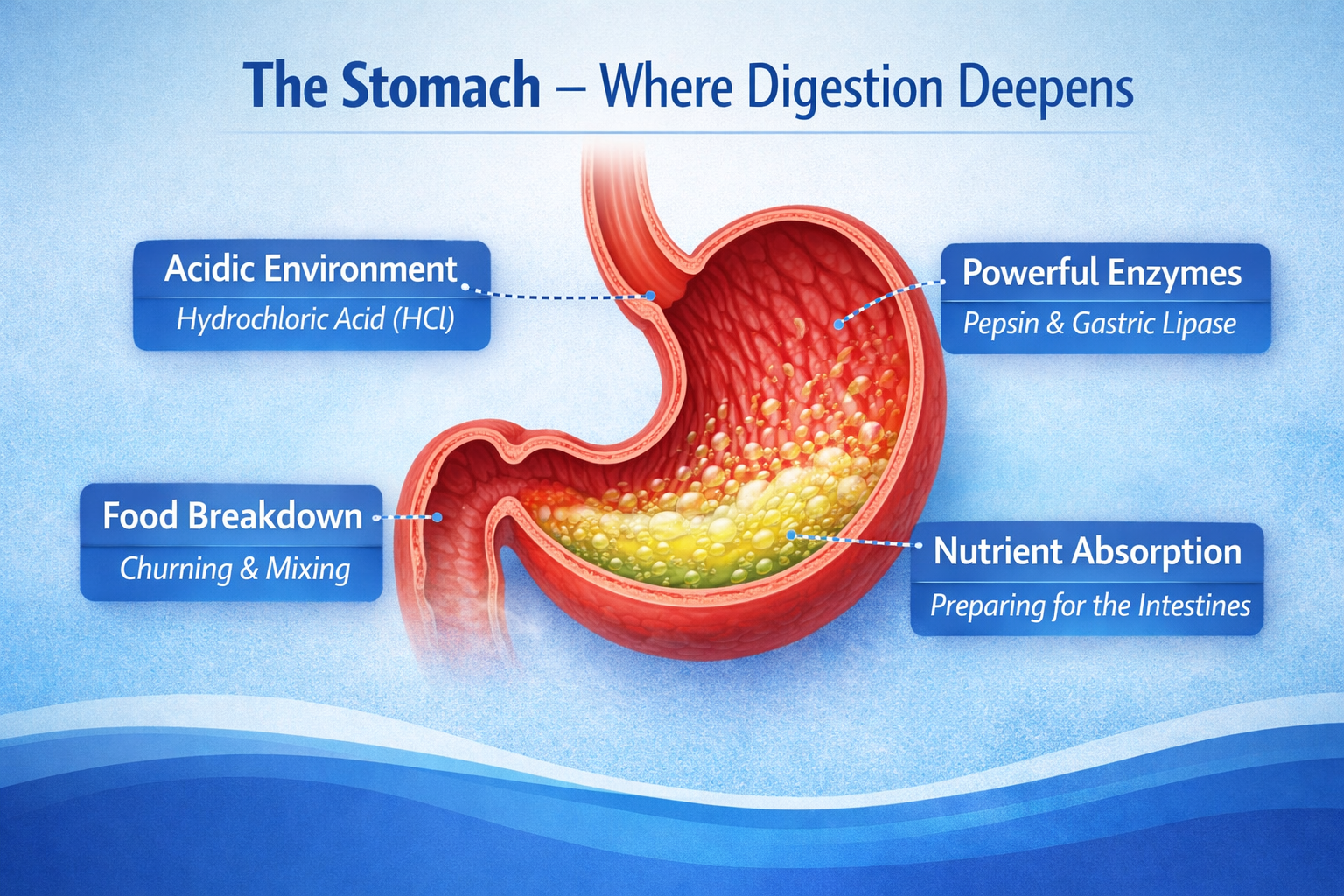
The Stomach — Where Digestion Deepens
Acid and enzymes begin breaking down food
After passing through the esophagus, food enters the stomach, where digestion becomes more active and complex.
The stomach combines mechanical movement with chemical digestion. Muscles gently churn the food while gastric juices — including hydrochloric acid and enzymes such as pepsin — begin breaking down proteins.
This acidic environment also plays a protective role by helping to neutralize harmful microorganisms that may enter with food.
The stomach does not empty all at once. Instead, it releases partially digested food gradually into the small intestine, allowing the next phase of digestion to occur in a controlled and coordinated way.
Because this stage is influenced by the nervous system, factors such as stress, rushed eating, or irregular meal timing can affect how comfortably digestion progresses.
Each step of digestion builds on the one before it.
When food is well-chewed and moves efficiently through the esophagus, the stomach is better prepared to carry out its role.
Digestive Enzymes & Herbal Support
Some individuals may find that additional digestive support can be helpful, especially if they experience occasional indigestion, heaviness after meals, or feel that food is not being broken down comfortably.
Enzyme Support
Digestive enzymes are designed to assist the body in breaking down proteins, fats, and carbohydrates.
When used, they are typically taken:
• Just before eating
• Or at the beginning of a meal
This timing allows them to work alongside the body’s natural digestive processes.
Taking them after a meal may be less effective, as digestion is already underway.
Herbal Bitters & Liquid Extracts
Herbal preparations such as gentian and sweet root (calamus) have traditionally been used to support digestion.
These are often taken:
• Shortly before meals
Bitters, in particular, work by stimulating digestive signaling — encouraging the body to prepare for food by supporting saliva production, stomach acid release, and overall digestive readiness.
In some cases, gentle support such as digestive enzymes or herbal bitters may be helpful when digestion feels sluggish or uncomfortable. These are typically used just before or at the start of a meal to work in rhythm with the body’s natural digestive process.
Supporting digestion isn’t always about adding more — often it’s about timing, awareness, and working with the body’s natural rhythm.