Digestion is a coordinated process that begins in the mouth and continues through the stomach — guided not only by physical movement, but also by the nervous system.
In the previous newsletters, we explored how food is prepared and broken down. In this next phase, we follow what happens after the stomach, where digestion continues and the body begins to access nourishment.
The Stomach Sets the Rhythm
The stomach plays an important role in preparing food for what comes next.
Rather than emptying all at once, it releases food gradually, allowing digestion to move forward in a steady and coordinated way. This pacing helps support the next phase, where nutrients begin to be processed more deeply.
The Influence of the Nervous System
This stage of digestion is closely influenced by the nervous system.
When the body is more relaxed, digestion tends to move forward with greater ease. The stomach can process food rhythmically and prepare it for the next step.
During periods of stress, however, the body may shift away from digestion.
The stomach can feel tighter or less responsive — sometimes as though it is holding rather than processing — which may influence how comfortably digestion progresses.
Moving Into the Next Phase
As digestion continues, food moves from the stomach into the small intestine — a transition that relies on timing, coordination, and communication between organs.
This is where the process begins to shift from breaking down food to making nourishment available to the body.

The Small Intestine — Where Nourishment Becomes Available
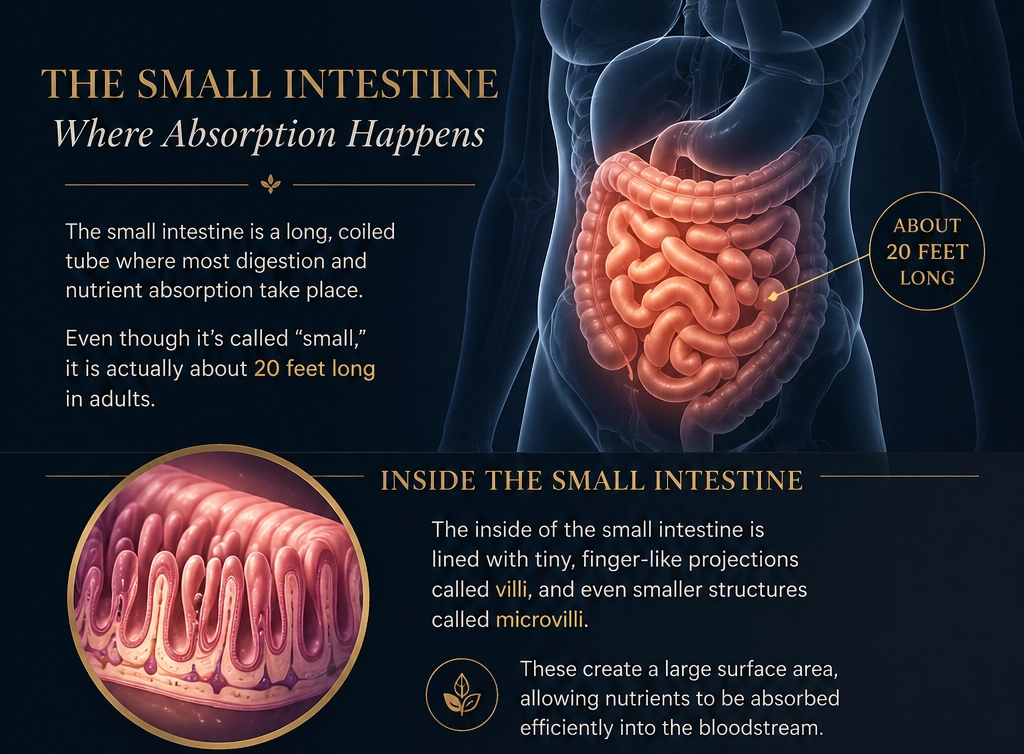
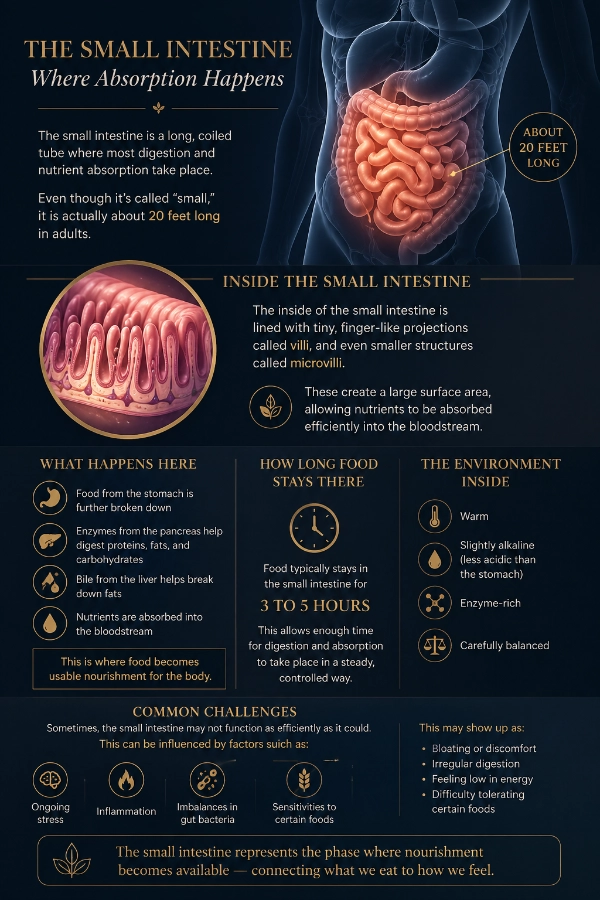
The small intestine is where digestion continues and the body begins to absorb and utilize nutrients.
Its structure is designed to support this process efficiently, allowing for steady interaction between food and the body.
Rather than being a single action, absorption is a gradual process that unfolds over time, supported by movement, enzymes, and internal balance.
Absorption as a Connected Process
Absorption is not just about the small intestine alone.
It reflects the work of multiple systems coming together — digestion, circulation, and internal balance — allowing nutrients to be distributed and used throughout the body.
When this process is supported, it can contribute to steady energy, comfort after eating, and overall well-being.
The Role of the Microbiome
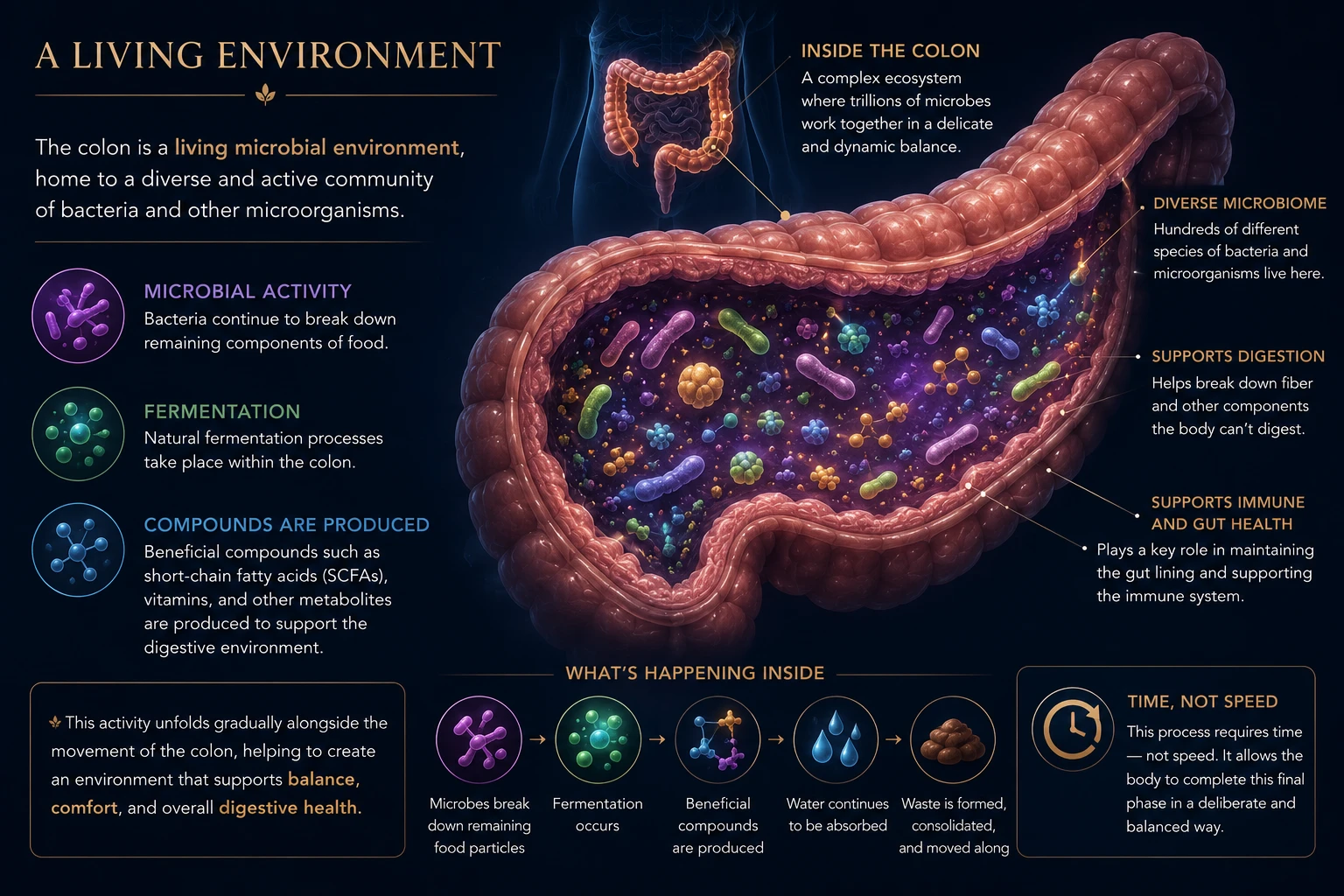
Within the small intestine and beyond, the body is supported by a diverse community of microbes.
These organisms play a role in helping maintain balance within the digestive environment and supporting how nutrients are processed.
Their presence reflects the interconnected nature of digestion — where many systems work together rather than in isolation.
A Coordinated Effort
Digestion is not the work of a single organ.
It is a coordinated process involving multiple parts of the body working together in rhythm — each contributing to how food is broken down, absorbed, and utilized.
Digestion is not only about what we eat, but how the body receives, processes, and uses nourishment.
The transition from the stomach into the small intestine represents a key moment in this process — where digestion deepens and nourishment becomes available.
Each step builds on the one before it, reinforcing the importance of supporting digestion from the beginning.
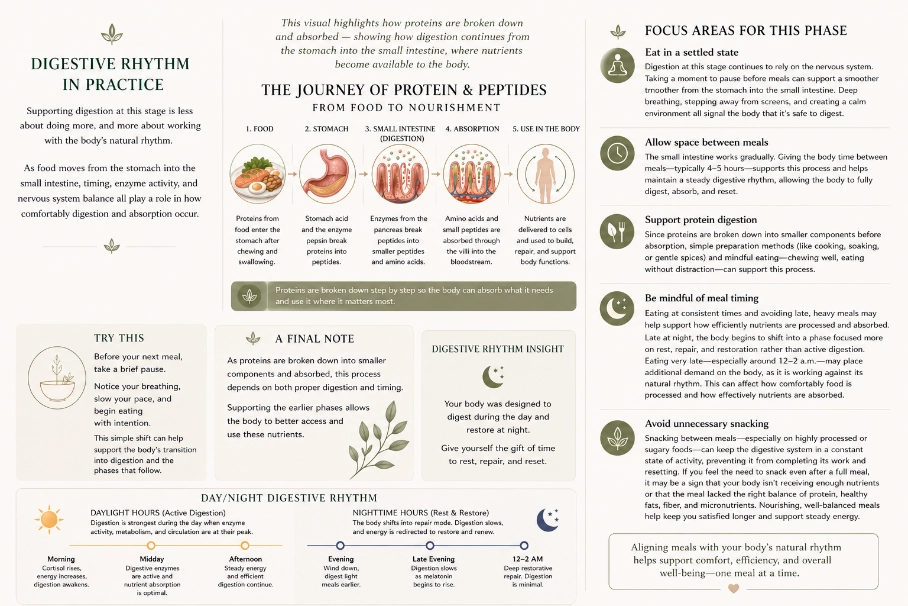
Digestive Rhythm in Practice
Supporting digestion at this stage is less about doing more, and more about working with the body’s natural rhythm.
As food moves from the stomach into the small intestine, timing, enzyme activity, and nervous system balance all play a role in how comfortably digestion and absorption occur.
Focus Areas for This Phase
Try This
Before your next meal, take a brief pause.
Notice your breathing, slow your pace, and begin eating with intention.
This simple shift can help support the body’s transition into digestion and the phases that follow.
A Final Note
The body does not simply receive nourishment — it prepares for it, processes it, and gradually makes it available.
From the stomach to the small intestine, digestion relies on timing, rhythm, and coordination.
Eating with intention and choosing nourishing foods helps support how nutrients are absorbed and utilized — connecting what we eat to how we feel.